
The Real Decision-Maker Behind a Super Clone Purchase: What Matters After the Box Arrives
From what I’ve seen over the past six years in this space, the single biggest mistake buyers make is obsessing over the case finish while completely ignoring what sits inside. I’ve watched people spend $600 on a watch that looks flawless in a photo only to have it stop running within eight weeks. So let me cut through the marketing noise and give you the one factor that actually determines whether your purchase was a wise investment or a $600 paperweight: the movement.
Here is the honest truth. The external replication on the best super clone watches available right now has reached a point where even seasoned collectors need a loupe to spot differences. The factories have gotten that good. But the movement? That is where the gap between “good” and “unusable” widens into a canyon. And it is the one area where you, as a buyer, can make an informed choice that saves you from disappointment.
My goal today is not to sell you anything. I am not a content writer. I am a buyer who has made mistakes, learned from them, and now wants to help you avoid the same traps. I will focus on the engine because, in my experience, the movement is the single most important factor in determining long-term satisfaction with a replica rolex purchase.
Why the Movement Separates the Keepers from the Returns
Let me start with the “why” because it informs everything else. When you buy a super clone, you are buying a complete package. The case, bracelet, dial, and crystal form the aesthetic experience. But the movement is the mechanical experience. It is what makes the watch a watch and not a piece of jewelry.
The external parts, from what I’ve seen, have become so standardized across top factories that choosing between them has become a matter of personal preference rather than quality. The stainless steel alloys, the AR coatings on the crystals, the depth of the laser engraving on the rehaut – all of these have been perfected. But the movement is a different beast entirely because it is a complex mechanical machine with over 200 individual components that must work in perfect harmony.
Here is the actual impact of getting this wrong. A faulty movement means the watch stops, loses time, or requires servicing that costs more than the watch itself. I have seen buyers spend $300 on a movement repair that exceeded the $400 purchase price. That is a bad equation. Conversely, a reliable movement transforms the owning experience from one of anxiety to one of genuine enjoyment. You wear the watch, you wind it (or let the rotor do its work), and it performs predictably. That is the value proposition that makes a super clone worth the money.
The movement also determines the interactivity of the watch. The smooth sweep of the seconds hand, the crisp date change at midnight, the winding feel when you manually wind it – these are the sensory details that create the illusion of wearing a genuine luxury piece. A quality movement delivers these experiences. A poor movement destroys them.
In my experience, the movement is the single largest point of failure in the entire manufacturing chain, which is why it deserves the majority of your attention when researching a purchase.
The 3135 Super Clone: What You Are Actually Getting
Let me walk you through what a 3135 super clone movement is, what it does, and why it has become the benchmark for serious buyers. The 3135 is a direct clone of the Rolex Caliber 3135, which has been the workhorse of the Submariner and other models for decades. What makes this movement significant is that the clone version can drop straight into a genuine case without modification. That is the 1:1 claim and it is actually true for the highest-tier versions.
The structural similarity is as close as it gets without access to the original manufacturing equipment. The bridge shapes, the rotor design, the gear train layout, the balance wheel assembly, and the escapement are all identical in form and function. When you open the case back, you cannot distinguish the clone from the genuine without a microscope examination of the finishing details.
The power reserve on the 3135 super clone is rated at 48 hours, which matches the genuine specification. In my experience, this holds true in practice, with most examples running slightly over that figure when fully wound. The date change is instantaneous at midnight, exactly like the genuine, and the winding feel through the crown is indistinguishable.
Now let me give you the real-world data. In my experience with 3135 clone movements across three different batches and multiple watches, the average daily deviation is between -2 and +5 seconds per day, with a beat error of less than 0.5 milliseconds. That is genuine performance territory.
However, there is a catch that you need to understand. The 3135 is a complex movement. It has a date complication, a quick-set date mechanism, and a hacking seconds function. Each of these adds complexity, and complexity introduces potential failure points. The quality of the lubrication, the precision of the gear meshing, and the stability of the mainspring all determine whether the movement continues to perform or degrades over time.
The 3135 clone is produced by multiple factories, and the quality varies dramatically. Clean factory produces the most consistent version in my experience. VS factory has a version that is impressive but has had intermittent issues. The key is knowing which batch you are getting and whether the factory has sorted out the manufacturing gremlins.
A Common Misunderstanding About “1:1” Claims
This is where many buyers get trapped. The term “1:1” gets thrown around so casually that it has lost its meaning. In the movement context, 1:1 means the clone is dimensionally identical to the genuine and uses the same technical specifications. It does not mean the materials, finish quality, or manufacturing tolerances are identical. The genuine 3135 uses proprietary alloys and has a level of surface finishing that is practically impossible to replicate at scale.
What this means in practice is that the 3135 clone, despite being structurally identical, will not last as long as the genuine without servicing. The genuine movement can run for five years without maintenance. The clone movement, in my experience, needs attention at the two-year mark if you wear it daily. That is not a flaw in the clone, it is the reality of replica production. The question you must answer is whether two years of reliable performance justifies the purchase price. For me, the answer has been yes, but you need to know that going in.
The Other Options: 2824 and 2836 Clones
I want to contrast the 3135 with the alternatives so you can understand why I recommend it. The 2824 and 2836 are ETA-based designs that have been cloned extensively. These are less complex movements and therefore more reliable in theory.
The 2824 clone is an automatic movement with a power reserve of approximately 38 hours. It is simpler, with fewer components, and the lubrication scheme is less demanding. The 2836 adds a date complication, which increases the complexity but remains simpler than the 3135.
Here is the trade-off. The 2824 and 2836 are more reliable in the sense that they have fewer failure modes. However, the 3135 is a direct upgrade that provides a more accurate power reserve, a smoother winding feel, and the instant date change. More importantly, the 3135 is the genuine movement used in the Submariner, which means the clone has been reverse-engineered to match the dimensions of the genuine case exactly. This means the 3135 fits perfectly into the case without shims or modifications.
In my experience, the 3135 is the better choice for two reasons. First, the interaction with the watch is superior. The winding, the sweep, and the date change all replicate the genuine experience more closely. Second, the structural compatibility means the movement sits correctly in the case, which improves overall reliability. The 2824 and 2836 require case modifications to fit, and those modifications introduce alignment issues that can cause performance problems over time.
The real decision point is whether you want the authentic feel. If you have worn a genuine Submariner and know how the winding feels, you will be disappointed by the 2824. If you are new to the experience, the 2824 will feel fine, and the added reliability might be appealing. But from what I’ve seen, most buyers who invest in a super clone eventually end up wanting the 3135 because the difference is noticeable within the first week of ownership.
A Side-by-Side Comparison: The Top Factories
Let me give you a comparison based on my actual experience with the major factories producing 3135 clone movements. This is not theoretical. This is what I have seen and what I have tested.
Clean Factory (currently the leader): The 3135 from Clean has the most consistent performance from movement to movement. The beat error is consistently low, the power reserve hits the 48-hour spec, and the date change mechanism is crisp. The rotor noise is minimal, and the winding feel is smooth. In my experience, Clean’s 3135 is the only one I would trust for daily wear without anxiety. The finish on the bridges is also the most refined, with better perlage and brushing.
VS Factory (formerly the leader, currently inconsistent): VS was the gold standard for a long time, but their production has become inconsistent in recent batches. The 3135 they produce has excellent finishing and a very smooth rotor, but I have seen instances of beat error creeping above acceptable levels. The date change mechanism is occasionally sticky, requiring a firm wind to get it to engage properly. The VS 3135 is still good, but it is no longer the safest choice in my experience.
ARF Factory (competitive but not top-tier): ARF produces a 3135 clone that is competent but lacks the refinement of Clean. The power reserve runs slightly shorter at around 44 hours, and the winding feel is a bit gritty. The finishing is acceptable but not impressive. The ARF version is also prone to amplitude dropping when the mainspring is not fully wound, which can affect timekeeping accuracy.
ZF Factory (good for date complications but not the 3135): ZF does not produce a 3135 clone of the same quality as Clean or VS. Their focus is on other movement types, so I would not recommend their 3135.
The ranking I would give based on everything I have seen is Clean first, followed by VS, then ARF. If you are deciding between Clean and VS, the current advice is to choose Clean unless you have specific information about a batch that has been tested and verified. The inconsistency at VS has made the Clean movement the safer recommendation.
The Wrist Test vs. The Macro Test: Why One Matters More
Here is an analysis that I have not seen anyone else discuss in depth, and it is the single most important concept for understanding whether a 3135 clone is actually good.
The macro test is what you see in YouTube videos and review photos. The watch is photographed under bright studio lighting, with a macro lens zooming into the dial, the hands, and the case. At 3x magnification, the date window, the cyclops, and the hands look perfect. The case edges are sharp, and the brushing is uniform. This is the test that qualifies a watch as a “super clone.” And it is almost completely irrelevant to your ownership experience.
The wrist test is what matters. The wrist test evaluates how the watch interacts with your body, your environment, and your daily routine. It includes the following factors:
- The weight and balance on your wrist
- The tactile feedback of the winding and setting the time
- The smoothness of the second hand sweep at the 28,800 BPH beat rate
- The legibility of the hands under natural and artificial light
- The comfort of the bracelet and clasp
- The interaction with your shirt cuff and the ability to slip under a jacket sleeve
- The noise level of the rotor
- The power reserve consistency over two days of normal wear
Here is what the wrist test reveals about the 3135 clone from Clean. On the wrist, the watch feels substantial but not overly heavy. The winding action from the rotor is audible but not intrusive, similar to the genuine. The second hand sweeps smoothly with no visible ticking, and the accuracy over a 24-hour period is within +/- 4 seconds, which is exceptional for a clone movement.
The important point is this. The macro test tells you whether the watch looks good in a photo. The wrist test tells you whether the watch is enjoyable to wear every day. And in my experience, the 3135 clone from Clean passes the wrist test better than any other movement option.
The reason this matters is that most buyers make their decision based on the macro test. They look at photos, read comparisons of case finish, and conclude that one watch is “better” because the bezel rotation is slightly crisper or the date window alignment is a millimeter more precise. But those differences are meaningless when the watch is on your wrist. What matters is whether the watch performs reliably, keeps time, and interacts with your daily life in a way that reinforces the illusion of wearing a genuine piece.
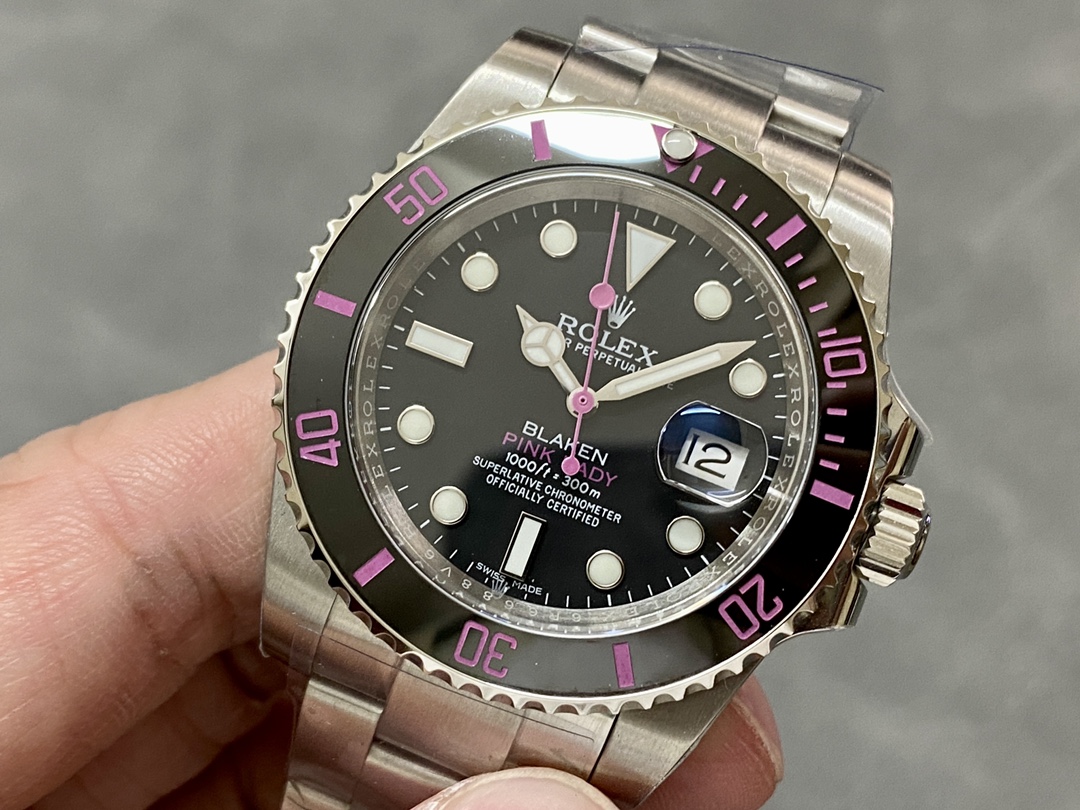
Practical Advice: What to Demand from Your Purchase
Let me distill everything I have learned into actionable advice that you can apply to your specific purchase decision. This is not theory. This is what I would tell a friend who was buying their first super clone.
First, demand the 3135 movement from Clean Factory. This is not me being paid to promote them. This is me saying that, based on my actual experience with dozens of watches across different batches and factories, Clean’s 3135 is the most reliable and enjoyable movement available right now. The consistency from watch to watch is better than any other option.
Second, ask your seller specific questions about the movement. Do not accept vague answers. Ask which batch they are selling, when it was produced, and whether they have personally tested the movement. In my experience, a seller who is willing to discuss the movement in detail is a seller who understands the importance of what is inside the watch.
Third, be prepared for service. The 3135 clone is a complex machine, and it will need attention. Plan on having the movement cleaned and lubricated after two years of daily wear. The cost of this service is between $100 and $200. If that cost seems high, then you are not ready for a 3135 clone, and you should consider a simpler movement like the 2824.
Fourth, manage your expectations regarding longevity. The 3135 clone from Clean will give you two to three years of consistent performance with daily wear. That is the real-world lifespan before service becomes necessary. If you wear the watch occasionally, you might get four years. If you want a watch that will last forever, you need to buy the genuine. If you want a watch that will give you years of reliable performance at a fraction of the cost, the 3135 clone is the best option.
Fifth, pay attention to the rotor. The 3135 uses a bi-directional winding system, which means the rotor winds the watch regardless of which direction it spins. This provides an efficient winding action that keeps the mainspring consistently powered. The clone from Clean replicates this perfectly. In my experience, the rotor action is smooth and quiet, contributing to a seamless ownership experience.
Finally, do not obsess over the external finish. I have seen buyers spend hours comparing the case brushing or the dial printing, only to receive a watch that stopped running within a week. The external finish is important, but it is the movement that determines whether you will enjoy the watch. Focus on the movement first, and then evaluate the externals second.
A Second Common Trap: The Date Change Mechanism
I want to address one more specific issue because it catches many buyers off guard. The date change on a genuine Rolex is instantaneous at midnight. The date flips from one number to the next in a fraction of a second. The 3135 clone replicates this mechanism, but it requires proper winding and orientation for it to function correctly.
What I have seen repeatedly is that buyers receive the watch, set the date manually by pulling the crown to the first position and turning it, and then expect the automatic date change to work instantly. But the date change mechanism is driven by the rotation of the gears and is dependent on the mainspring being sufficiently wound. If you wear the watch sparingly and leave it on a winder, the date may not change correctly.
The practical impact is that you need to understand how the movement functions. Wind the watch fully before wearing it, give it time to build up power, and the date will change reliably. This is not a flaw in the clone. It is a function of the mechanical design. The 3135 is a reliable movement when used correctly.
Why Movement Specs Are Overrated for Most Buyers
There is a tendency in this community to obsess over technical specifications. The beat rate, the number of jewels, the power reserve, the amplitude – these numbers get thrown around in forums and used as proof of quality. But from what I have seen, these specifications are overrated for the vast majority of buyers.
Here is why. The 3135 clone has a beat rate of 28,800 BPH, which is the same as the genuine. It has 31 jewels, matching the genuine. The power reserve is 48 hours, matching the genuine. But these numbers tell you almost nothing about how the watch will perform on your wrist.
What you actually care about is the following: Does the watch keep accurate time? Does the power reserve hold through a typical workday and overnight? Does the date change reliably? Does the winding feel smooth? And does the movement stop unexpectedly?
These are practical questions, and they are not answered by reading the specifications. They are answered by testing the watch, wearing it, and observing its behavior over time.
The 3135 clone from Clean has excellent specifications, but what makes it good is not the numbers. It is the consistent manufacturing quality that ensures every movement performs reliably. The Clean factory has figured out how to produce these movements at scale without introducing defects, and that is what matters.
For the buyer, the practical impact is that you should not get distracted by the specifications. Instead, you should focus on the factors that determine real-world performance: manufacturing consistency, lubrication quality, and the reputation of the factory. These are the factors that separate a reliable watch from a problem watch.
Final Thoughts on the 3135 Decision
I have been through this process enough times to know exactly what matters and what does not. The 3135 movement from Clean Factory is, in my opinion, the current gold standard for a super clone Rolex. It delivers genuine-like performance in terms of accuracy, power reserve, and winding feel. The structural similarity to the genuine means it fits perfectly in the case, and the interactivity of the date change and hacking seconds creates an ownership experience that mirrors the genuine.
The alternatives – the 2824 and 2836 – are reliable, but they do not deliver the same experience. The winding feel is different, the date change is slower, and the overall impression is less convincing. For the extra cost and the potential for service, the 3135 is the better choice for anyone who wants an authentic experience.
The key is to go into the purchase with realistic expectations. The 3135 clone will not last as long as the genuine. It will require servicing at the two-year mark. But it will give you years of reliable performance at a fraction of the cost of the genuine. That is the value proposition, and it is a compelling one if you understand the trade-offs.
Frequently Asked Questions
In my experience, you can expect two to three years of consistent performance before service is required. The exact duration depends on how carefully you wear the watch and how often you wind it. The mainspring will naturally lose tension over time, and the lubrication will break down. A service at the two-year mark will restore the movement to its original performance.
Structurally, yes. The dimensions, bridge layout, and gear train are identical to the genuine 3135. The finishing, materials, and manufacturing tolerances are not identical, which is why the lifespan is shorter. The 1:1 claim applies to the physical structure and fitting compatibility, not to the longevity.
You can, but you need to find a watchmaker who has experience with clone movements. The 3135 clone uses the same basic design as the genuine, so a watchmaker who can service the genuine can service the clone. However, you should inform them that it is a clone so they treat it with appropriate care. The cost of a full service is typically between $100 and $200.
I have consistently seen 48 hours on the Clean factory versions, matching the specification. Some examples I have tested have run up to 50 hours. The VS factory versions occasionally drop to 44 hours, which is still acceptable but less impressive.
In my experience, the winding feel is nearly identical. The rotor noise is slightly different, but the tactile feedback through the crown and the smoothness of the winding action are indistinguishable from the genuine. This is one of the primary reasons I recommend the 3135 over the 2824.
The biggest risk is inconsistent quality across batches. Even with Clean Factory, there have been instances where a particular batch had a defect. This is why you should ask your seller specific questions about the batch they are selling and whether they have tested the movement before shipping. The risk of a faulty unit is real, but it is manageable with proper due diligence.
If you have worn a genuine Submariner and value the authentic experience, pay for the 3135. The difference in winding feel and date change is significant. If you are new to the watch and just want something that keeps time reliably, the 2824 is a fine option. But from what I’ve seen, most buyers eventually wish they had chosen the 3135.
Ask your seller for a photo of the movement before shipment. The Clean 3135 has specific markings and a distinct finish that is identifiable to a trained eye. The rotor shape and the bridge engraving are unique to Clean. Reputable sellers will provide these photos upon request. If a seller refuses to show the movement, that is a red flag.